Blog

Thinking on semantic data modeling and the universal semantic layer, plus release notes on what's new in Ellie.

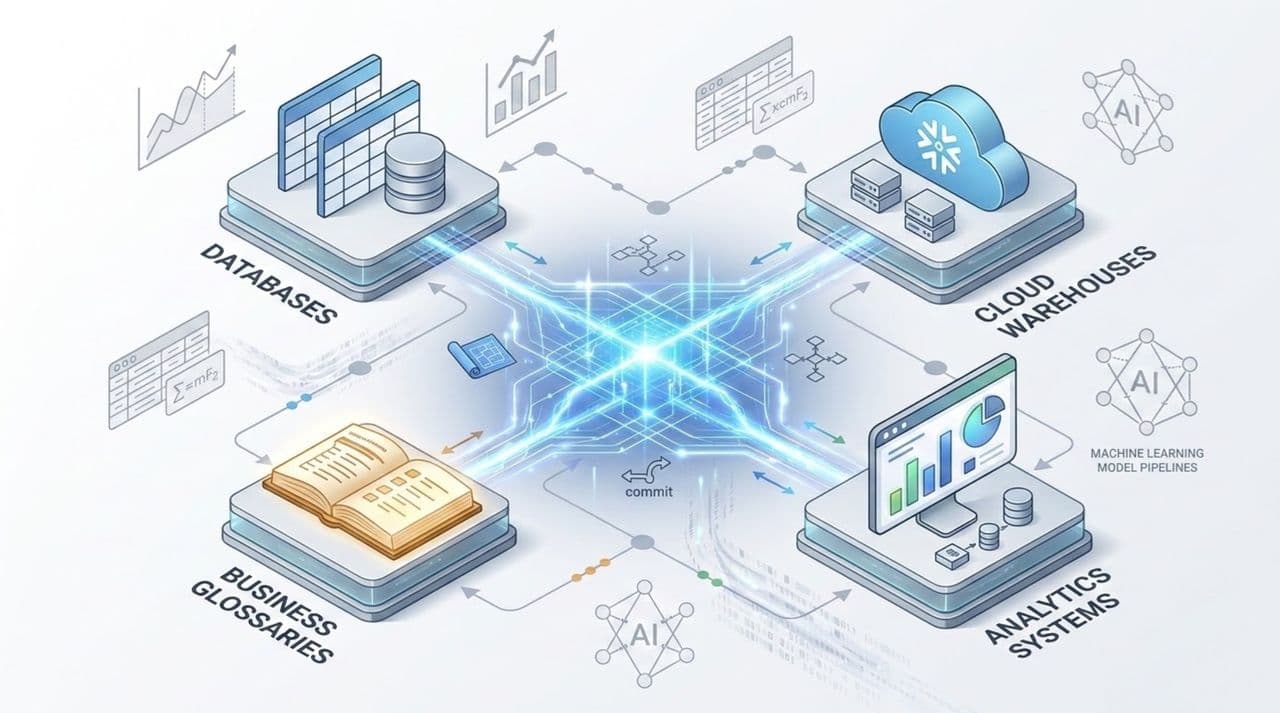
Diagram connecting databases, business glossaries, cloud warehouses, and analytics systems through a central glowing hub

15 Best Data Modeling Tools Compared

This article provides a comprehensive comparison of 15 data modeling tools, categorized by their capabilities, G2 ratings, and pricing structures. It covers enterprise platforms, cloud-based solutions, and free software designed for various use cases, ranging from enterprise semantic modeling and cloud database design to SQL transformations and visual diagramming, helping teams select the right platform for their specific data architecture needs.
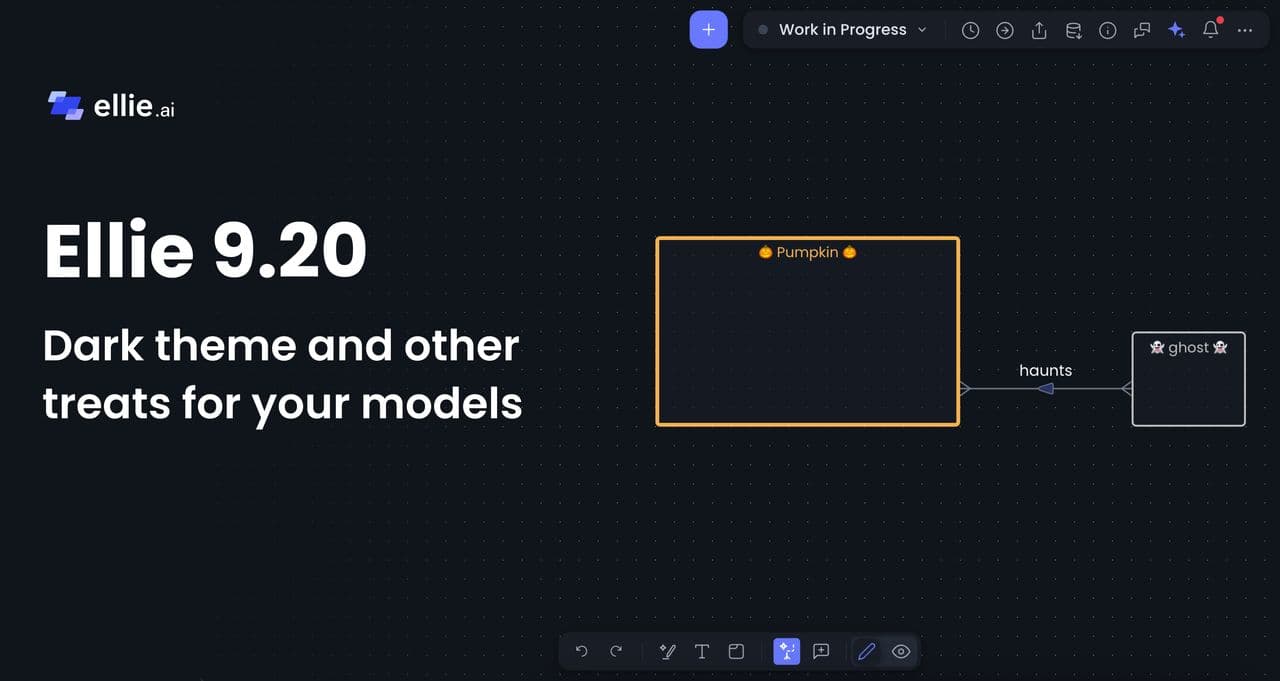

Ellie 9.20 interface showing dark theme and a data model with pumpkin and ghost entities

Ellie 9.20: Dark theme and other treats for your models

Switch to dark theme, align entities with snap to grid, and restore deleted models, entities, and relationships from Trash.

Team collaborating on data modeling with technical database diagrams on the left and business discussion on the right

What to Know About Data Modeling Tool Misalignment

Seven reasons traditional data modeling tools create business-stakeholder misalignment, from diagrams only architects can read and semantic fragmentation across departments to disconnected governance and static models that drift from how the business actually operates.

Illustration of a businessman and an AI robot facing a shared semantic data layer connecting enterprise data sources

Why Your AI Strategy Needs a Semantic Backbone

AI can query a warehouse, but it can't infer what the business means by Customer or Revenue. A semantic backbone gives AI, and every tool around it, the same shared business context.

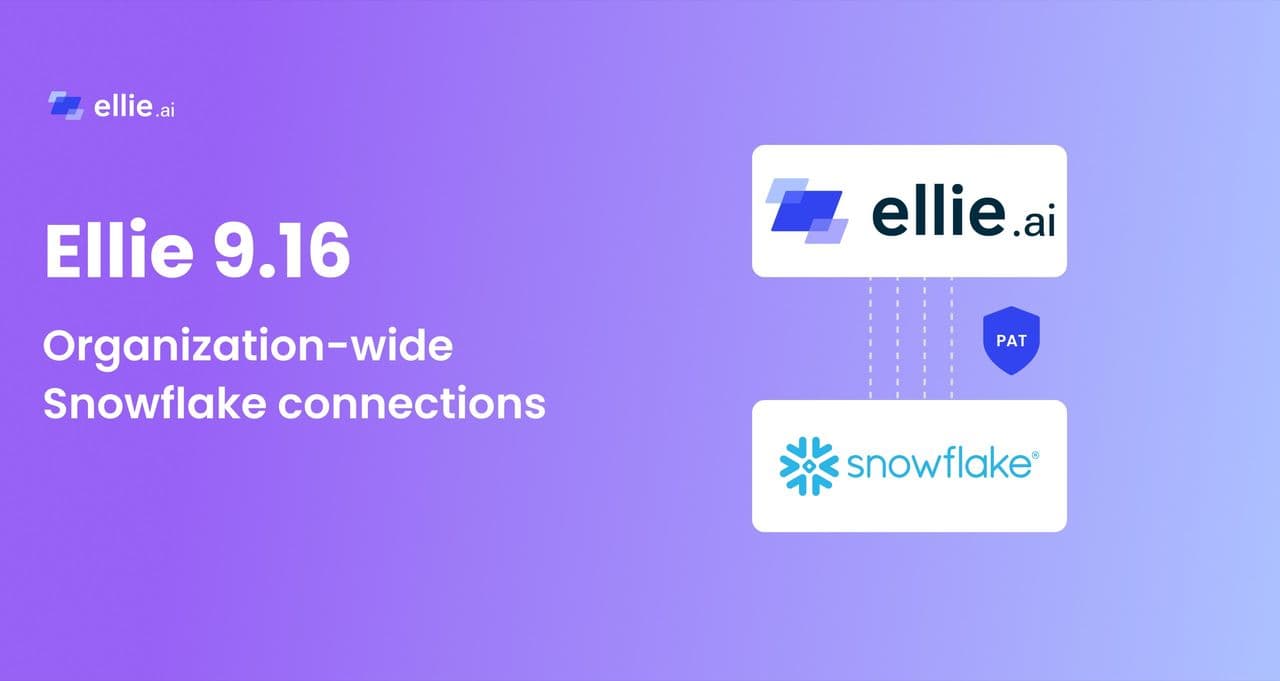
Ellie 9.16 release graphic showing the Ellie.ai and Snowflake logos linked by a shared personal access token

Ellie 9.16: Organization-wide Snowflake connections

Snowflake connections are now simpler and more secure: an admin sets up one encrypted, organization-wide connection that anyone importing a Physical model can reuse.

Illustration of a frustrated businessman at a laptop beside a confused AI robot surrounded by question marks and charts

You invested millions in agentic AI, and the answers are still wrong. What's next?

Millions invested in agentic AI, yet answers are still wrong. The real problem usually isn't hallucination, it's that agents lack the shared business context needed to interpret data correctly.

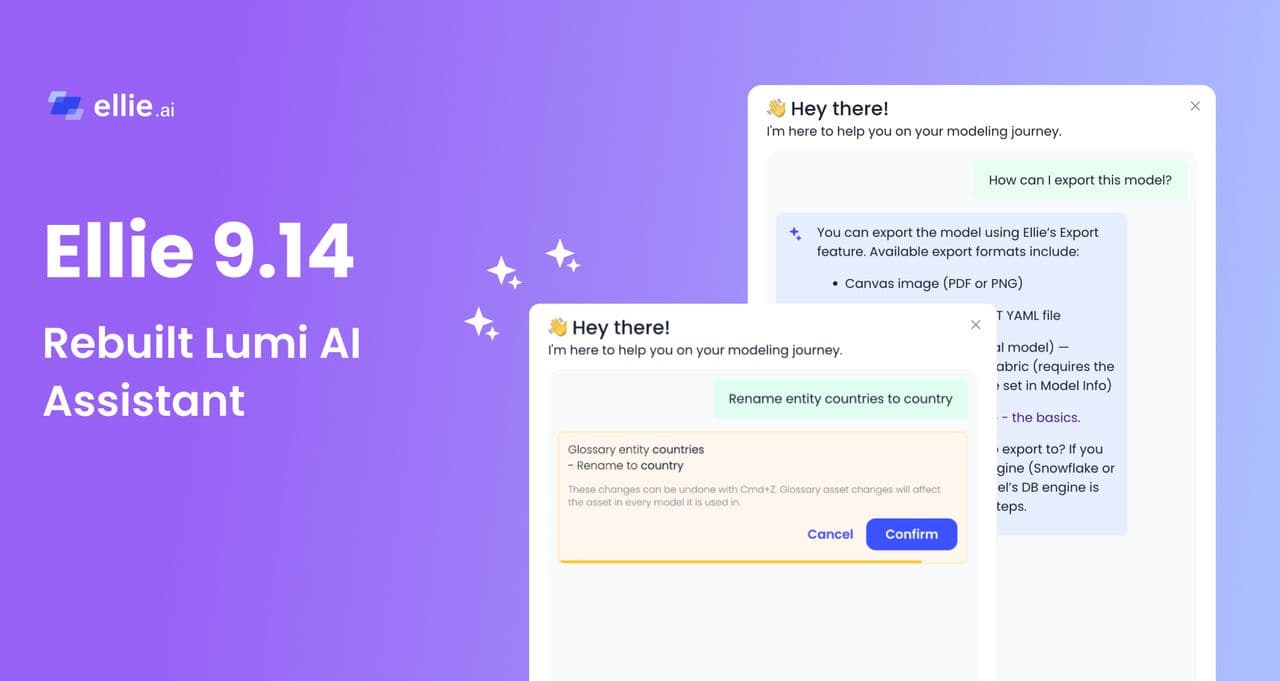
Ellie 9.14 release graphic showing the rebuilt Lumi AI assistant chat panel answering a modeling question and confirming an entity rename

Ellie 9.14: Rebuilt Lumi AI Assistant

The rebuilt Lumi AI Assistant now works directly on the canvas: it explains your model, applies entity and relationship changes, and asks for confirmation before anything sensitive changes.

A person presenting a Business Glossary and Data Catalog on a transparent screen to a team in a meeting room

Best Data Modeling Tools for Governance Teams

A comparison of six data modeling tools for governance teams (Ellie.ai, ER/Studio, SAP PowerDesigner, SqlDBM, Oracle SQL Developer Data Modeler, and Hackolade), evaluated on governance-platform integration, collaborative modeling, semantic/conceptual depth, full-stack modeling, and metadata management.

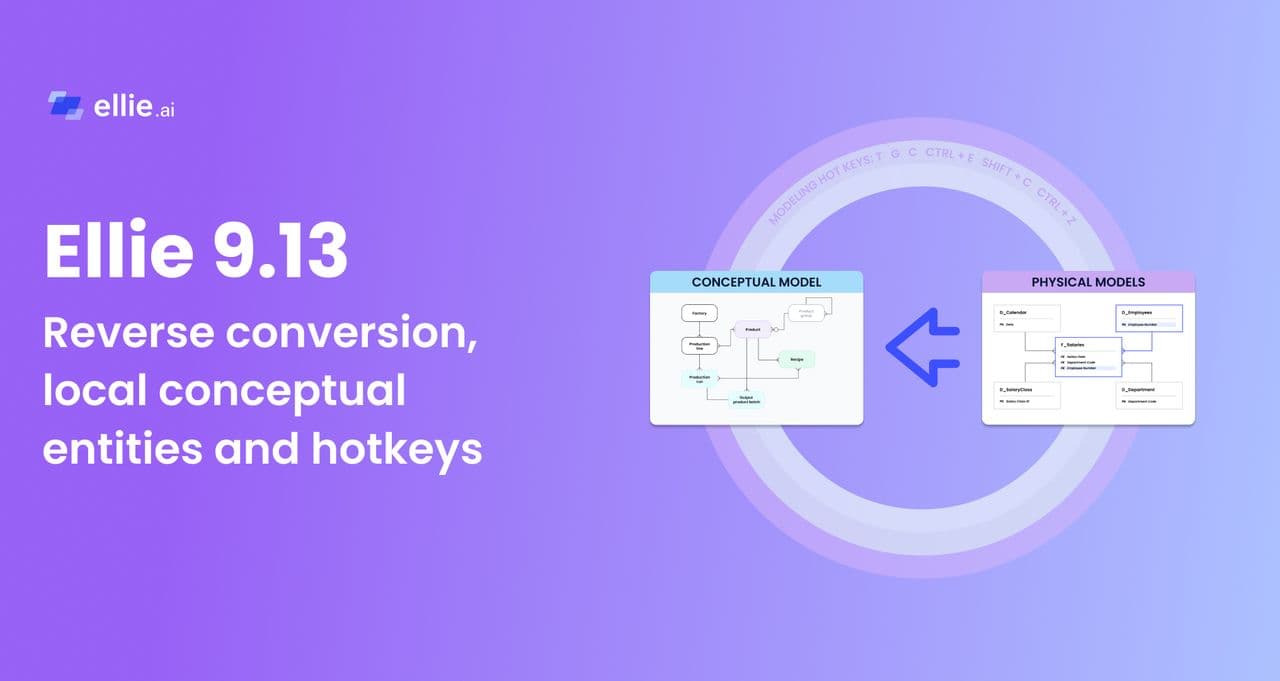
Ellie 9.13 update release graphic highlighting reverse conversion, local conceptual entities and hotkeys

Ellie 9.13: Reverse conversion, local conceptual entities and hotkeys

Ellie 9.13 adds reverse conversion from physical or logical back to conceptual, makes new conceptual entities local by default, and introduces canvas hotkeys.

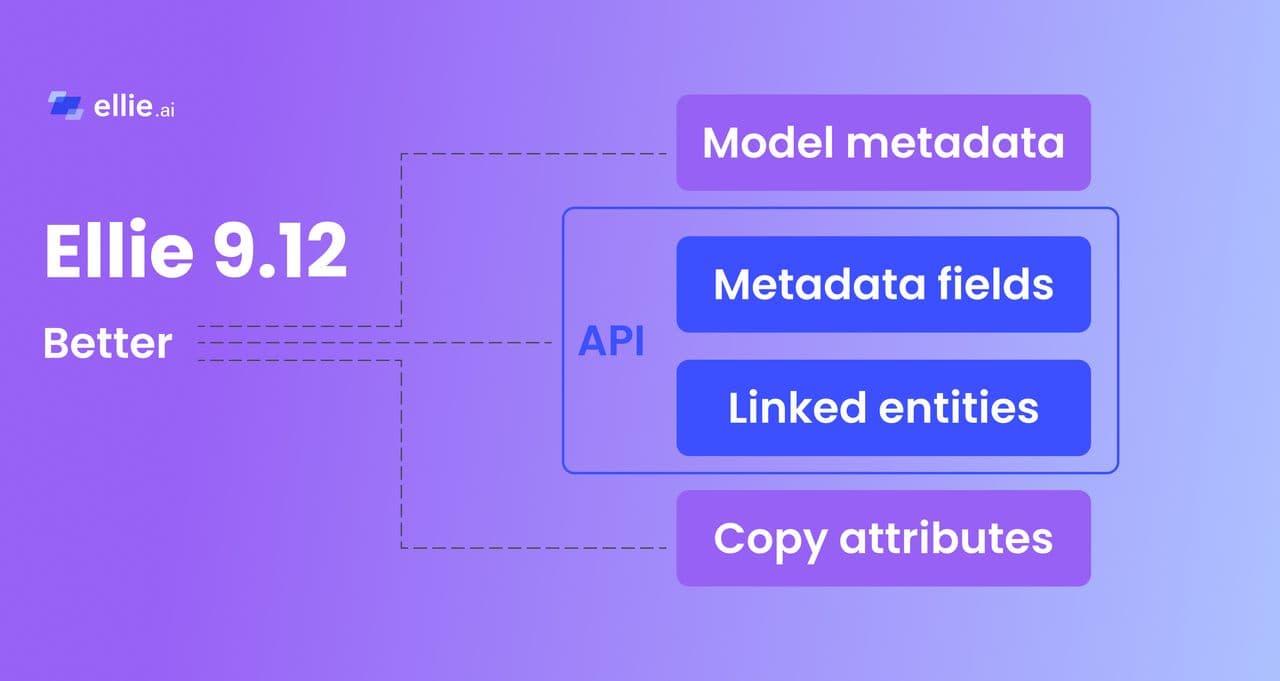
Ellie 9.12 release graphic highlighting API updates for model metadata, metadata fields, linked entities, and copy attributes

Ellie 9.12: Model metadata, copy attributes in view mode, and API updates

Ellie 9.12 adds model-level metadata, lets you copy attributes from read-only templates, and extends the API with linked entities and metadata field definitions.

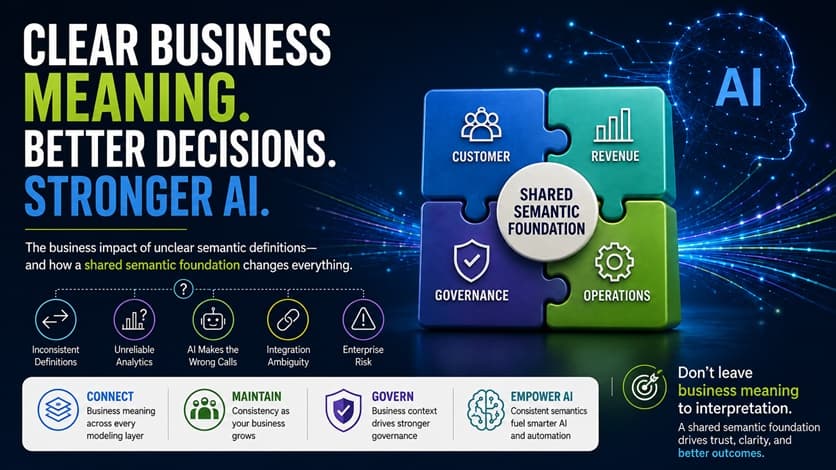
Illustrated graphic titled Clear Business Meaning, Better Decisions, Stronger AI, showing a shared semantic foundation connecting Customer, Revenue, Governance and Operations

The Business Impact of Unclear Semantic Definitions

Unclear semantic definitions distort reporting, weaken governance, and cause Agentic AI to make unreliable decisions. A connected semantic foundation keeps business meaning consistent enterprise-wide.

Three people in a meeting viewing holographic data with customer, account, and product metrics alongside a humanoid robot

What If Every Query Wasn’t Up for Interpretation?

Why the same query returns different answers depending on who asks: a look at building a shared semantic foundation through four steps — agreeing on concepts before standardizing them, connecting business meaning to logical and physical models, keeping ownership and context with the model, and exposing that meaning to analytics and AI tools beyond the modeling environment.

Ready to See It in Action?

A 45-minute call with a data modeling expert, not a sales pitch.